Radial Fracture, Patient Education 6: Answering Patient Questions
0:00
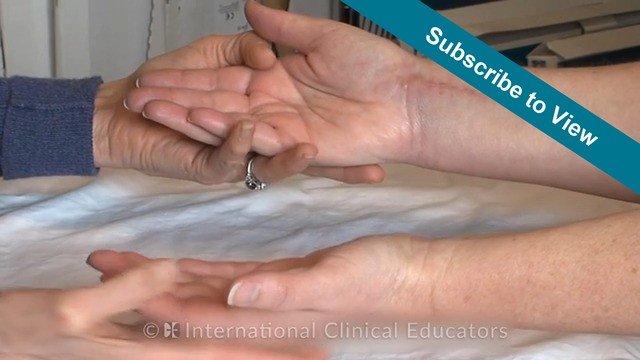
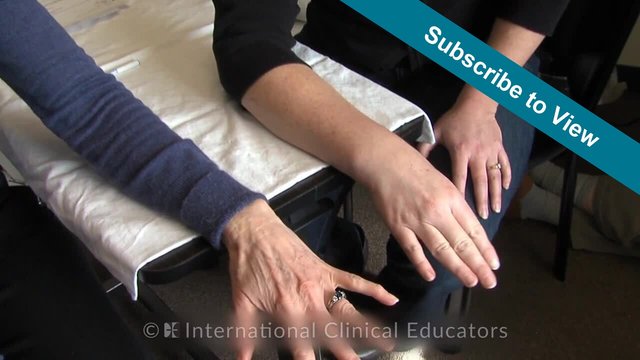
As the initial treatment session ends, the patient asks a common question: “How long will this take?” The therapist explains how end range of motion feels and the importance of continuing active range of motion to minimize loss of hand function.
As the initial treatment session ends, the patient asks a common question: “How long will this take?” The therapist explains how end range of motion feels and the importance of continuing active range of motion to minimize loss of hand function.

Wrist Similar Videos
-
Radial Fracture, Part 2: Initial Observations
0:00
As the therapist begins her exam to determine impairments that will affect hand function, she compares both hands and notes edema, points of pain and limitation of range of motion of the hand and wrist. The patient is eight weeks post surgery.
-
Radial Fracture, Patient Education 3: AROM Program
0:00
Eight weeks post surgical repair for a distal radial fracture, the therapist instructs the patient on a home program to increase active range of motion of the fingers, hand and wrist. She explains precautions related to pain and soft tissue tightness
-
Radial Fracture, Patient Education 4: Strengthening & Edema
0:00
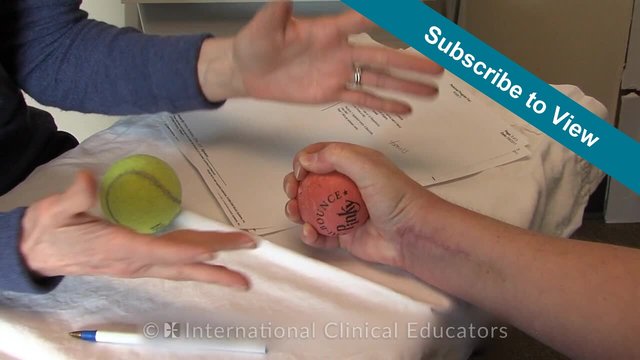
Weakness and edema are two key problem areas for this patient (eight weeks post radial fracture repair). The therapist introduces a strengthening program for grasp and also demonstrates lymphatic massage to help reduce edema of the hand and wrist.